What’s Really Going Through Your Customer’s Mind Before They Buy?
 Kevin Arrow
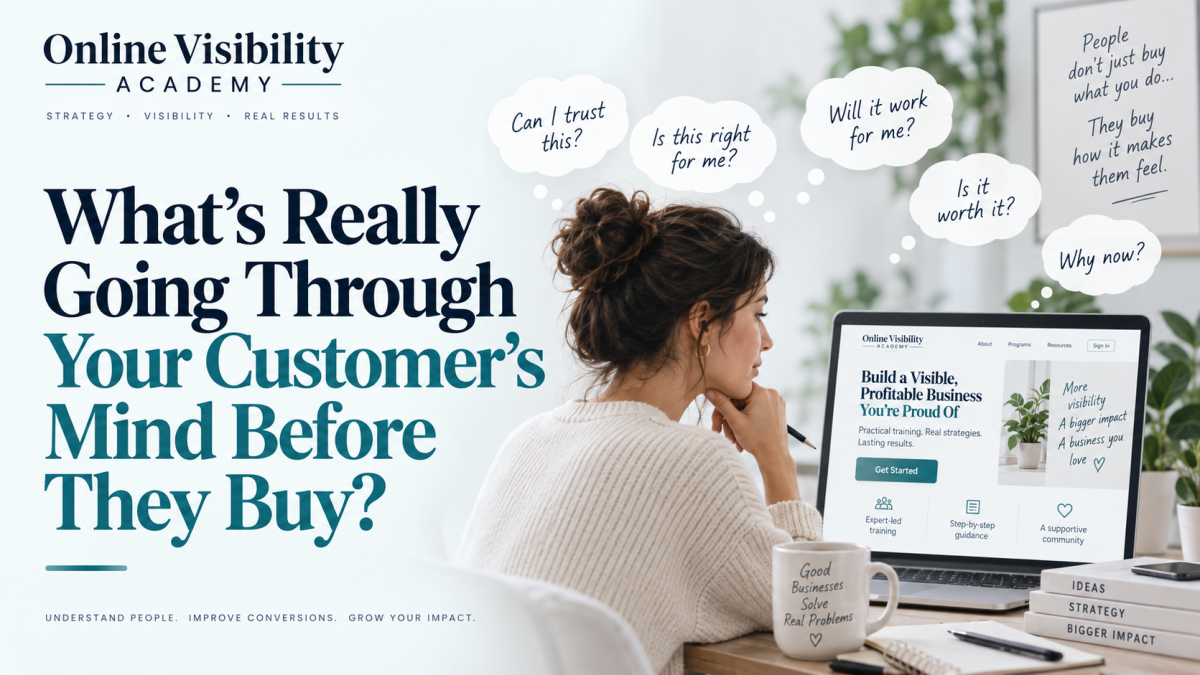
Discover what goes through a customer’s mind before they buy, from trust and value to hesitation and the final decision.
What’s Really Going Through Your Customer’s Mind Before They Buy?
A customer rarely lands on your website, reads a few lines and instantly decides to buy. Even when the purchase looks simple from the outside, there’s usually a lot more going on in their head than you can see.
They may be interested, unsure, curious, sceptical, tempted, distracted or comparing you with three other options at the same time. They might want what you’re selling, yet still feel hesitant about spending the money. They may even leave your website planning to come back later and then completely forget.
That’s why understanding what happens before someone buys is so useful. It gives you a much clearer picture of what your marketing actually needs to do.
Marketing is rarely just about explaining what you sell. It’s about helping people move through the questions, doubts and decisions that come before a purchase.
The First Question Is Usually: “Is This Relevant to Me?”
Before somebody thinks about price, features or whether they trust you, they first need to decide whether your offer feels relevant.
That decision can happen very quickly.
Someone might arrive on your website because they saw a social post, clicked an advert, opened an email or searched for something on Google. Within a few seconds, they’re trying to work out whether they’re in the right place.
If your message is too broad, vague or focused on your business, they may leave before they ever get to the useful part.
This is why strong marketing tends to start with the customer’s situation. It speaks to something they recognise.
For example, imagine you offer social media training for small business owners. You could lead with a message about learning content strategies, platform techniques and audience growth. That explains the product.
A message such as “Struggling to know what to post each week?” starts somewhere much closer to the customer’s actual experience.
That sense of recognition matters because people pay more attention when something feels connected to a problem they already have.
They’re Trying to Work Out Whether You Understand Them
Once someone decides your offer may be relevant, another question starts to appear: “Do they actually understand my problem?”
Customers want to feel that you understand what they’re dealing with. That doesn’t mean you need to exaggerate their frustration or make everything sound dramatic. It means showing that you recognise the real situation behind the purchase.
Someone buying marketing training, for example, might not simply want “better marketing”. They might be tired of trying random tactics and wondering whether any of them are actually working. They may feel confused by conflicting advice or frustrated because they’re putting effort into content without seeing enough sales.
When your marketing reflects those real experiences, people feel understood.
That creates a stronger connection because the customer begins to think, “This sounds like it was made for someone in my situation.”
Then Comes the Quiet Question: “Can I Trust This?”
Trust has a huge influence on buying decisions, especially online.
Your customer cannot always see the product before they buy it. They may never have met you. They may have discovered your business ten minutes ago.
That means they’re looking for signals that help them decide whether you’re credible.
They might look at testimonials, reviews, your website, your social media, your about page or the way you explain the offer. Sometimes they’re simply judging whether what you’re saying feels believable.
Small details can influence this more than people realise.
A clear description can build trust because it shows the customer exactly what they’re getting. A vague promise can have the opposite effect. Realistic language often feels more credible than exaggerated claims because it gives the customer something specific to judge.
If you say a course will “transform your entire business overnight”, some people will immediately become suspicious. If you explain exactly what they’ll learn and how they can apply it, the decision feels much easier to assess.
Trust often grows through clarity.
They’re Comparing the Purchase With Doing Nothing
Businesses tend to think their customer is comparing them with competitors, and sometimes they are.
Quite often, though, the real competition is doing nothing.
Your customer might be thinking, “I could buy this now, or I could just leave it for another month.”
That’s especially common with products that solve a problem someone has learned to live with. They know they could improve something, but the problem isn’t painful enough to force immediate action.
This is why relevance and timing matter so much.
People need a reason to believe that acting now will make a meaningful difference. That reason doesn’t have to be fake urgency, a countdown clock or a dramatic warning. It can simply come from helping them see the cost of continuing as they are.
If someone keeps guessing what to post, keeps getting very few enquiries or keeps wasting money on marketing that isn’t working, there’s already a cost involved. Your marketing can help them recognise that without trying to frighten them.
Price Is Only One Part of the Decision
When sales are slow, businesses often assume the price is the problem.
Sometimes it is. Often, the real issue is value.
A customer may happily spend £100 on something they believe will genuinely help them, yet hesitate over a £20 product they don’t fully understand.
Price makes sense in context.
People are asking themselves whether the outcome feels worth the cost. They’re also thinking about the effort involved. A course that costs very little may still feel expensive if it looks like it will take weeks to complete or requires skills they don’t have.
That means your marketing should make the value clear.
What will they learn? What will they be able to do afterwards? How will this make something easier, faster or clearer?
The clearer that connection becomes, the easier it is for someone to judge whether the price feels right.
They’re Looking for Reasons to Say No
This might sound negative, but it’s a normal part of decision-making.
People often look for reasons to avoid making a purchase because buying involves commitment. Even a small purchase means giving up money, time or attention.
So your customer may start thinking of objections.
“I’m too busy.”
“I’ll probably never finish it.”
“I’m not sure this is aimed at me.”
“I’ve tried something similar before.”
“I can probably find this information for free.”
These objections are useful clues because they tell you what your marketing may need to address.
If someone is worried about time, explain how the course is structured. If they’re unsure whether it’s suitable for beginners, tell them exactly who it’s for. If they’ve been disappointed by similar products, show them what makes yours useful in practical terms.
You don’t need to answer every possible objection on one page, but you should think about the most likely reasons someone might hesitate.
They Want to Know What Happens After They Say Yes
People need to be able to picture the purchase.
What do they get? What happens next? How quickly can they access it? What do they need to do first?
This is especially important with digital products and courses because the product can feel less tangible.
If someone buys a physical item, they know a package will arrive. With a course, ebook, membership or online service, the experience can feel more abstract.
Clear explanations help.
Tell people what’s included, how they’ll access it and what they can expect after they buy. This reduces uncertainty and makes the decision feel safer.
The easier it is to imagine what happens next, the easier it becomes to move forward.
They’re Also Asking: “Will This Work for Someone Like Me?”
People look for evidence that an offer fits their situation.
This is where testimonials, examples and specific descriptions can be incredibly useful.
If you say, “This course will improve your marketing”, the customer has to decide whether that applies to them.
If you say, “This course is designed for small business owners who want to understand why customers respond to some messages and ignore others”, the fit becomes much clearer.
The same applies to social proof.
A testimonial from someone who sounds similar to your target customer can be more persuasive than a vague five-star review.
People want to see themselves in the story.
Familiarity Often Comes Before the Sale
Sometimes the person reading your blog today has no intention of buying anything.
That doesn’t mean the content has failed.
They may remember your name. They may see another post next week. They may join your email list, open a few messages and return to your website a month later.
By that point, you’re no longer a complete stranger.
That familiarity can make the buying decision feel easier because there’s less uncertainty.
This is one of the reasons consistent content works well over time. Every useful piece of content gives someone another chance to understand how you think, what you know and whether your approach feels right for them.
People often buy when familiarity and timing finally meet.
The Customer Isn’t Following a Perfectly Straight Line
It’s tempting to imagine a neat process where somebody discovers you, reads your sales page and buys.
Real life is usually messier.
A person may look at your offer three times before buying. They may click through from an email, get distracted, return from a Google search a week later and then finally purchase after seeing a testimonial.
They may even decide against buying and change their mind later.
That’s why it helps to stop thinking about marketing as one moment of persuasion.
Each piece of marketing plays a different role.
One post may create awareness. Another may build trust. A sales page may answer questions. A testimonial may reduce hesitation. An email may bring someone back at the right moment.
Together, those touchpoints help the customer make a decision.
Good Marketing Helps People Make Sense of Their Own Decision
Marketing psychology becomes useful when you start seeing the buying process from the customer’s point of view.
You begin thinking about what they need to notice, understand and believe before they feel comfortable taking action.
That changes the questions you ask about your marketing.
Instead of wondering how to make a headline sound cleverer, you start asking whether the customer will recognise themselves in it.
Instead of adding more information because the page feels too short, you ask whether the information actually helps someone make a decision.
Instead of assuming price is the problem, you look at whether the value is clear.
Those shifts can make your marketing much more effective because you’re working with the way people make decisions.
Understanding the Decision Makes Marketing Easier
When you understand what’s going through your customer’s mind, marketing stops feeling quite so random.
You start noticing the small things that influence decisions. You see why trust matters, why clarity can be persuasive, why people hesitate and why they sometimes need several interactions with a business before they buy.
You also get better at spotting where your own marketing might be making the decision harder than it needs to be.
If you want to understand more about how people make buying decisions, what influences attention and trust, and why customers sometimes hesitate even when they’re interested, check out the Marketing Psychology for Beginners course from Online Visibility Academy.
The course is designed to help you understand the principles behind customer behaviour and apply them to your own marketing in a practical way.
Check out the Marketing Psychology for Beginners course and start looking at your marketing from your customer’s point of view.
Categories: : Marketing Psychology