Why People Aren’t Buying From You (Even When Your Offer Is Good)
 Kevin Arrow
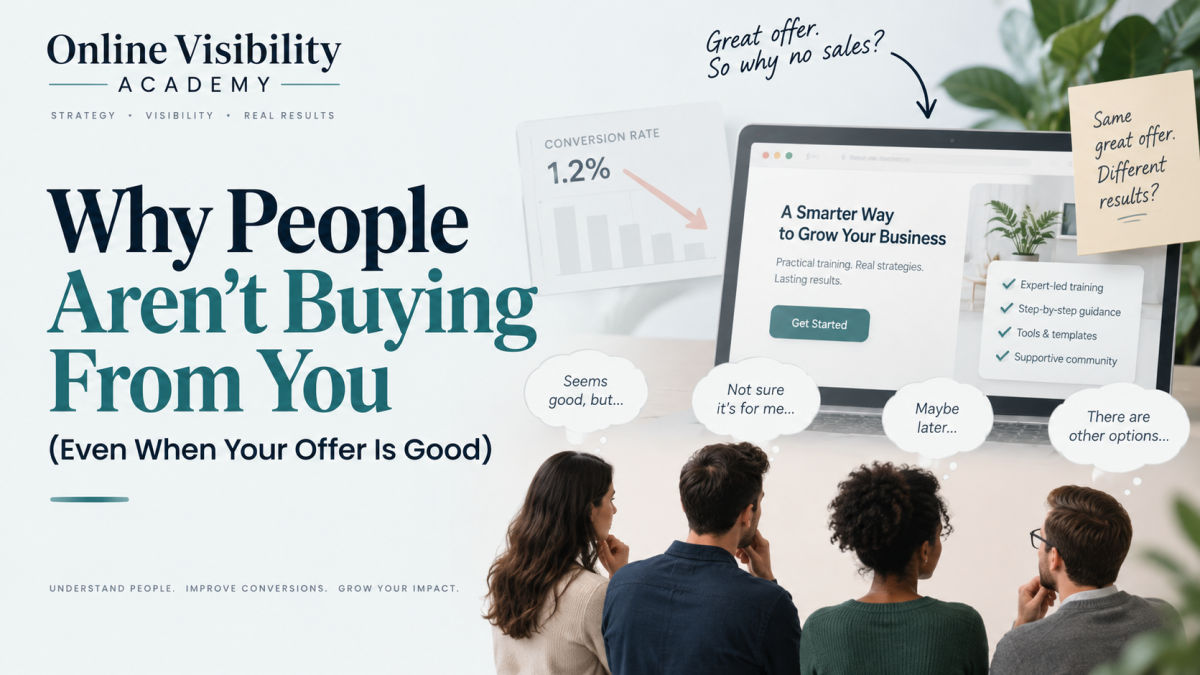
Why aren’t people buying from you, even when your offer is good? Discover how trust, relevance, hesitation and buying psychology influence customer de
You can have a genuinely useful product, explain what it does clearly, post regularly, build a decent website and tell people exactly how your offer can help them, yet still get very few sales. That’s one of the most frustrating parts of marketing. You look at what you’re selling and think, “This is good. People need this. Why aren’t they buying?”
The answer is often simpler than you think. People rarely buy because they’ve been given enough information. They buy when something feels relevant, useful and safe enough to act on. That’s where marketing psychology becomes valuable because it helps you understand what’s happening in someone’s mind before they click, enquire, book or buy.
Once you understand that, a lot of marketing starts to make far more sense.
Being Good Isn’t Enough
Most business owners naturally focus on the quality of what they sell. You’ve spent time developing your product or service, learning your subject and making sure you can deliver something worthwhile, so it makes sense that quality feels like the most important thing.
Your customer sees it differently because they haven’t experienced your product yet. They can’t judge the quality in the same way you can, so they’re making a decision based on what they can see before they buy.
They might be wondering whether the offer is really for someone like them, whether it will help with their particular problem, whether they can trust you and whether the price feels worthwhile. They may also be thinking about what happens if they buy and regret it, whether they really need it now or whether they should keep looking elsewhere.
Most of these questions are never said out loud, and your customer may not even be fully aware they’re asking them. They still have a big influence on whether somebody takes action.
People Have to Notice You First
Before someone can buy from you, they have to pay attention, and this is where a lot of marketing falls down. We’re all exposed to huge amounts of information every day through emails, adverts, videos, social posts, notifications, websites and messages, so people are constantly filtering what they see.
Your potential customer isn’t carefully studying every piece of content that appears in front of them. They’re quickly deciding what feels relevant and what can be ignored.
If your marketing opens with a long explanation about your company, your qualifications or the features of your product, someone may leave before they ever reach the part that matters to them. A message such as “Getting website visitors but hardly any enquiries?” gives them an immediate reason to pay attention because they recognise their own situation.
That recognition can be powerful. People tend to notice things that appear connected to something they’re already thinking about.
Relevance Matters More Than Information
One of the easiest mistakes to make in marketing is trying to explain everything. You want people to understand what they’ll receive, so you add more detail. Then you add another section because there’s something else they need to know, and before long you’ve created a page packed with information.
The problem is that information alone rarely creates desire. People need to connect that information to their own situation and understand why it matters to them.
Imagine you sell a course about email marketing. You could say, “Learn email marketing strategies, automation techniques and campaign optimisation.” There’s nothing wrong with that, but it still leaves the potential customer to work out why any of those things matter.
Compare that with: “Learn how to turn the people already on your email list into customers without constantly wondering what to send them.”
The second version helps someone picture the result. They can see how the course fits into a problem they already have, and that makes the offer feel more relevant.
Your Customer Is Looking for Reasons to Trust You
Buying always involves some level of risk. Sometimes that risk is financial, sometimes it’s the time involved and sometimes it’s simply the fear of making the wrong choice.
Even with a low-cost product, there’s still a small question running through the customer’s mind: “Is this going to be worth it?”
Trust helps answer that question. Someone may trust you because they’ve followed your content for months, seen a recommendation from another customer or read positive reviews. They may also trust you because your sales page feels clear, specific and believable.
This is one reason exaggerated marketing can sometimes work against you. If every product is described as life-changing, every result is incredible and every offer is unmissable, people can start to become cautious. Specific claims tend to feel more credible because they give the customer something concrete to judge.
Tell people what they’ll learn, show them what they’ll receive, explain who the product is designed for and give them enough information to decide whether it suits them. That creates a very different feeling from trying to push someone towards a sale.
Hesitation Isn’t Always About Price
When somebody reaches your sales page and leaves without buying, it’s tempting to assume the price was the problem. Sometimes it is, although people hesitate for many other reasons.
They may not understand exactly what they’re getting or they might be unsure whether the course is too advanced or too basic. They may like the idea but worry they won’t have time to complete it, or they may have bought something similar in the past and been disappointed.
Sometimes there’s no major objection at all. The purchase simply doesn’t feel urgent enough, so they tell themselves they’ll come back later.
This is where understanding your customer becomes incredibly useful. Instead of asking how you can sell harder, it can be more helpful to ask what might be making someone hesitate.
That changes the way you write your marketing. You start answering real concerns, making things clearer, removing unnecessary friction and giving people enough confidence to make their own decision.
People Want to Understand What Changes After They Buy
A list of features tells someone what’s included, while stronger marketing helps them understand why those features matter.
Take something simple such as a workbook. Saying “Includes a workbook” tells the customer what they’ll receive. Saying “Use the workbook to apply each idea to your own marketing as you work through the course” explains how that workbook helps them.
That small difference can have a big effect because people are rarely excited by the feature itself. They’re interested in what it helps them do.
A template can save time. A checklist can help someone remember important steps. A course can give them the knowledge they need to make better decisions. A consultation might help them get clarity on something they’ve been stuck on for months.
When you write marketing, keep moving beyond what the customer gets and think about what it allows them to do.
Familiarity Has a Bigger Effect Than Most People Realise
Most people won’t discover you today and buy from you five minutes later. Some will, but many won’t.
They might read one of your blog posts, see a social post a few days later, open an email and then visit your website. They may disappear for a few weeks before coming back again.
From your side, that journey can look messy. From their side, they’re gradually becoming familiar with you.
Familiarity reduces uncertainty because people start to recognise your name, your style and the way you explain things. This is one reason useful content matters so much. Every blog post, email or social post gives someone another opportunity to understand how you think and decide whether they trust you.
You aren’t relying on every piece of content to create an immediate sale. You’re helping someone become comfortable enough to consider buying when the time is right for them.
Emotion Still Plays a Part in Logical Purchases
People often like to think they make buying decisions rationally. They compare prices, read reviews, look at features and do plenty of research, yet emotion still has an influence.
Someone buying accounting software may want fewer mistakes and less stress at the end of the month. Someone booking a photographer may want to feel confident they’ll have photographs they’re proud to share. Someone paying for marketing training may simply want to stop feeling as though they’re constantly guessing.
These feelings matter because the product is often connected to a bigger outcome. Good marketing acknowledges that without becoming dramatic. You can show that you understand the frustration behind a problem and explain what might feel easier once that problem is addressed.
That creates a stronger connection than simply listing features and expecting the customer to do the rest.
Too Much Choice Can Create Friction
Sometimes sales pages make buying harder simply because they give people too much to think about. There might be multiple packages, several bonuses, different pricing options, long menus, pop-ups and links leading somewhere else.
Every additional decision asks for a little more mental effort, and for a low-cost course or product that can be enough to make somebody leave.
The buying decision should feel straightforward. The customer should be able to understand the problem, what the course helps with, what they’ll get, what it costs and what they need to do next.
Clear marketing often feels easier to trust because the customer doesn’t have to work hard to understand what’s happening.
Marketing Psychology Doesn’t Need to Be Complicated
When people hear the phrase “marketing psychology”, they sometimes imagine clever tricks designed to manipulate customers. In reality, it can be much simpler than that.
Marketing psychology helps you understand why people behave the way they do. Why does one headline make someone stop scrolling while another gets ignored? Why does social proof make a purchase feel safer? Why does too much choice make decisions harder? Why do people put off buying something they genuinely want? Why does familiarity increase trust?
Once you understand those ideas, you start noticing them everywhere. You also begin to see your own marketing differently.
You notice when your message is too vague, when you’re talking too much about your product and not enough about the customer, and where somebody might hesitate. You start making marketing decisions with a clearer idea of why you’re making them.
Stop Guessing What Might Work
Marketing becomes exhausting when every decision feels like guesswork. You start wondering whether you should change your headline, add a countdown timer, offer a discount, make the sales page longer, make it shorter, add more testimonials or simply post more often.
There’s no single tactic that works for every business because every audience and buying decision is different.
Understanding the psychology behind marketing gives you a better way to judge those decisions. You can think about what your customer needs at a particular stage. They may need more information, more reassurance, a clearer reason to care, proof that other people have had a good experience or simply a much easier next step.
That gives you something more useful to work with than copying tactics just because you’ve seen somebody else use them.
If you’d like to understand more about why people pay attention, what creates trust, what makes someone hesitate and what influences buying decisions, check out the Marketing Psychology for Beginners course from Online Visibility Academy.
It’s designed to explain the principles in plain English and help you apply them to your own marketing without getting buried in jargon.
Check out the Marketing Psychology for Beginners course and start understanding what’s really happening behind the buying decision.
Categories: : Marketing Psychology